
Key Takeaways
Marijuana use can be detected in bodily fluids between 1 to 80 days after use, depending on a variety of factors.
How long marijuana stays in your body varies enormously between people. One month-long abstinence study estimated a range of 4 to 80 days among its participants.
CBD doesn't turn into THC in the body, but full-spectrum and mislabeled hemp products carry THC that does register. The certificate of analysis is where the real number is.
Some tests look for THC-COOH, an inactive compound the body produces as it breaks THC down. It stays detectable far longer than THC does.

Intro
Marijuana can show up on a drug test long after the effects have worn off. How long depends on the test being used, how often you consume, how much you take, and the product you take it from.
People ask this a dozen ways. How long does marijuana stay in your body, how long does marijuana last in your system, how long does it take to get marijuana out of your system. Every version has one answer, and it starts with the test.
There's no single number that applies to everyone. Studies following the same people through monitored abstinence find windows ranging from a few days to a few months.
This guide covers what each test measures, how long it keeps finding it, and what moves the number most. There's a detection chart further down if that's what you came for.
Quick Answer: How Long Does Cannabis Stay in Your System?
Marijuana is usually detectable for a day or two in blood, around a day in saliva, one to four weeks in urine, and up to about 90 days in hair. Frequent consumers sit at the long end of all four.
The ranges are wide because most tests aren't looking for THC. They're looking for THC-COOH, an inactive compound your body produces as it breaks THC down, and that one sticks around much longer.
Researchers tested this directly on 70 regular cannabis consumers. Everyone stopped for a month, and repeat urine samples confirmed nobody slipped, which is unusual for a study like this.
Most of the group stopped testing positive around the 10-day mark. Counting the fastest and the slowest people in the study, the estimated spread ran from 4 days to 80 days.
Nineteen percent of them, close to one in five, were still failing a standard workplace drug test after more than 25 days without cannabis. Same amount of time off, very different results. [Source]
How Long Does Marijuana Stay in Your System Chart
To make the timelines easier to understand, we’ve made a chart separated by the four common test types.
Test Type | Occasional use/a few times a month | Frequent use |
Blood | About 1 to 2 days | Still showing up after 6 days in most studies |
Saliva | About 24 hours | Can still show up more than a day later |
Urine | A few days | About 10 days for most people, up to 80 for some |
Hair | Often comes back negative, since hair testing tends to miss light use | Up to about 90 days |
Note: These timelines are estimates based on various studies, not guaranteed detection windows. Actual results vary depending on factors such as frequency of use, individual metabolism, test sensitivity, and the specific substance being tested.
What's the Difference Between THC and THC Metabolites?
Almost every confusing thing about cannabis drug testing traces back to one distinction. The compound that gets you high and the compound that fails you a test are not the same molecule, and they leave your body on completely different schedules.
THC is the active one. It reaches your blood within minutes of inhaling, produces the effects you notice, and clears out of your blood fairly quickly once you stop.
Your liver then breaks it down. A metabolite is just what's left over after your body has finished processing something, the same way caffeine and alcohol leave their own leftovers behind.
THC's main leftover is called THC-COOH. It produces no effects at all, so carrying it around tells you nothing about how you feel.
What makes THC-COOH matter is that it doesn't flush out fast. It's fat-soluble, meaning it settles into fatty tissue and releases slowly over days or weeks instead of hours.
So a positive test doesn't always mean someone is feeling anything. You can test positive Monday morning for a Saturday night and feel completely normal, with the leftover still on its way out.
Here's where it lands for testing. Urine panels, the kind most workplaces use, look for THC-COOH. Blood and saliva tests look for THC itself.
That one design choice is why the four tests disagree so often. A saliva swab is asking whether you consumed in the last day, and a urine test is asking whether you consumed at all in the past few weeks.
What Types of Drug Tests Detect Cannabis?
Four tests are used in practice, and which one you face usually comes down to who's doing the testing. Employers overwhelmingly use urine. Roadside and post-incident testing leans on saliva or blood, and hair testing stays rare outside specific legal and clinical settings.
One piece of shorthand runs through all four. Concentrations are measured in nanograms per milliliter, written ng/mL, and every testing program sets a cutoff, which is the concentration at which a lab calls a sample positive instead of negative.
That cutoff matters as much as the biology does. The same sample can pass one program and fail another.
How Long Does THC Stay in Urine?
THC usually stays in urine for a few days after occasional use, 1 to 2 weeks if you use a few times a week, and about 10 days if you use daily. In one study of daily users, the estimated range ran from 4 days to 80 days.
Urine testing is the standard for workplace screening because it's cheap, quick to collect, and covers the longest window of any test in routine use. The target is THC-COOH, the inactive leftover rather than THC itself.
Most programs run it in two steps. An initial screen flags anything at or above 50 ng/mL under federal criteria, and flagged samples go to a lab for confirmation at a stricter 15 ng/mL.
How long does marijuana stay in your urine? Frequency decides it. In the month-long abstinence study, the average elimination half-life was 2 days, meaning concentrations roughly halved every couple of days.
How you consumed matters too. Researchers who gave 21 infrequent consumers matched doses found oral cannabis produced about ten times the peak urinary THC-COOH of vaporized cannabis. [Sources]
How Long Does THC Stay in Saliva?
Saliva has the second shortest detection window of the four tests. THC usually stays in saliva for less than 24 hours after occasional use, and a couple of days if you use daily.
A saliva test uses an absorbent pad held in the mouth for a few minutes. It's the easiest of the four to collect and the hardest to tamper with, since the person never leaves the room.
It looks for THC itself rather than the leftover, so it’s goal is to verify if you used cannabis recently.
A 2024 meta-analysis pooled seven controlled studies and 1,157 saliva measurements. Positives still turned up at a 1 ng/mL cutoff well past the 24-hour mark, which is longer than most people expect from a test built to catch recent use.
How Long Does THC Stay in Blood?
THC usually stays in blood for about a day after occasional use, 1 to 2 days if you use a few times a week, and 6 days or more if you use daily. Blood has the shortest detection window of the four tests.
A blood test needs a trained collector and a needle, so it turns up after crashes, at hospitals, and in drug-driving cases rather than in hiring.
Concentrations peak fast. In controlled testing they were highest at the first measurement, ten minutes after inhaling, and dropped from there.
How long does THC stay in your blood also varies a lot from person to person. Seventeen adults given the same 25 mg dose peaked anywhere between 1 and 38 ng/mL, almost 40 times apart on an identical dose.
How long does marijuana stay in your blood if you consume daily? Considerably longer. A systematic review of six studies found five recorded blood THC above 2 ng/mL in frequent consumers after six full days without cannabis.
How Long Does Marijuana Stay in Hair?
Marijuana can show up in a hair test for up to about 90 days. Daily users usually show up across that whole period, people who use a few times a week sometimes do and sometimes do not, and occasional users often do not show up at all.
Labs cut about 1.5 inches of hair closest to the scalp. Head hair grows around half an inch a month, which is where that 90-day figure comes from.
A hair test also misses recent use. Hair takes a week or two to grow out far enough to be cut, so the last few days do not show up in the sample.
Hair tests also have a contamination problem. Ten volunteers applied ordinary hemp oil to their scalps daily for six weeks without consuming any cannabis, and 89% had cannabis compounds turn up in their hair. [Source]

What Affects How Long Marijuana Stays in Your System?
How long marijuana stays in your system depends on nine things: how often you use, how much you take, the THC potency, the product type, how you take it, your metabolism, your body composition, how hydrated you are, and which test you take.
These do not work separately. Someone who uses daily and prefers edibles is stacking two of the biggest factors at once, and that combination is what pushes detection windows out to weeks.
Frequency of use. This is the biggest factor. THC-COOH builds up faster than the body clears it when you use regularly, so a daily user starts every new detection window with metabolite already in their system.
Amount consumed. Bigger doses leave more metabolite behind. In the urine study, higher doses produced higher peak concentrations and took longer to reach a negative sample.
THC potency. A jar testing at 28% delivers roughly twice the THC of a 14% jar in the same size bowl. Most people fill the bowl the same way either way, so stronger flower means a bigger dose without feeling like one.
Product type. Edibles leave far more metabolite in urine than inhaled cannabis at the same dose.
Method of consumption. Vaporizing puts more THC into your blood than smoking the same dose. Researchers who compared the two measured higher blood THC and higher metabolite concentrations after vaporizing.
Metabolism. Your body processes THC at its own rate, and the gap between people is wide. In the month-long study the average half-life was 2 days, but individual results varied enough that the average was a poor guide to any one person.
Body composition. THC-COOH stores in fat, so body composition affects how quickly it works its way out. This is part of why two people with the same habit can clear at different speeds.
Hydration. Drinking a lot of water dilutes a urine sample and lowers the concentration a lab reads. It does not remove anything from your body, and labs check creatinine and specific gravity, so a diluted sample gets flagged instead of passing.
Test type and cutoff. The cutoff is the concentration at which a lab calls a sample positive, and each program picks its own. A sample that fails a 20 ng/mL screen can pass a 50 ng/mL screen with no change to what is actually in it.
Two of these matter more than the rest. Your frequency of use and the test being run will tell you more about your likely result than the other seven put together.
Does Product Type Matter?
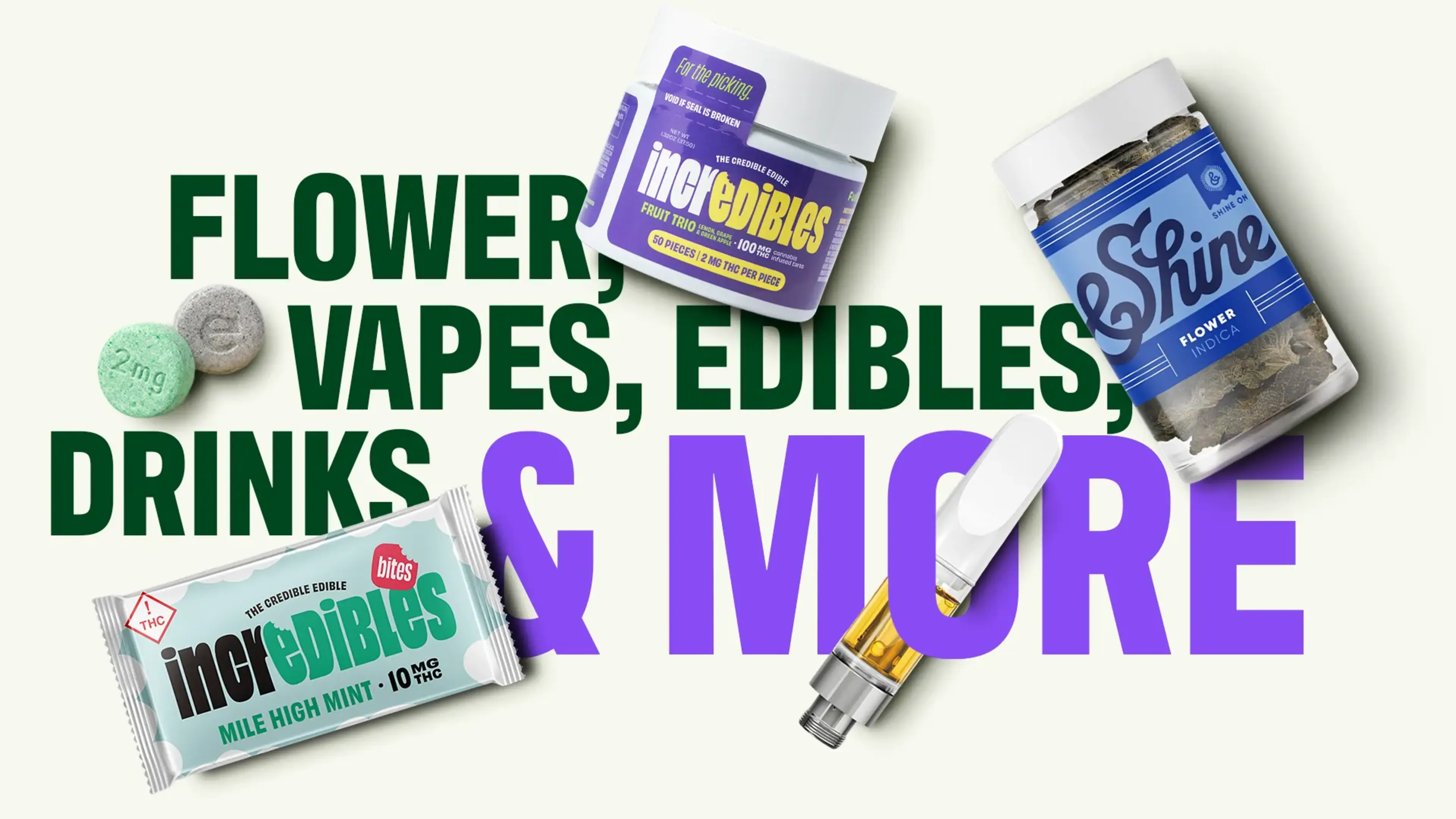
Yes. Product type changes how fast THC reaches your blood and how much metabolite your body produces afterward. Eating cannabis leaves the largest trace in urine, and inhaling it leaves less at the same dose.
Two things change with format. The first is how quickly you feel it, and the second is how much THC-COOH ends up in your system once it has been processed.
Flower and Pre-Rolls
Smoked flower reaches the bloodstream within minutes and peaks around the 10-minute mark. Effects arrive fast and fade sooner than with anything you swallow.
Inhaled cannabis leaves less metabolite in urine than an equal oral dose. It still registers on a urine test, so a shorter high does not mean a shorter detection window.
Most flower on a dispensary menu tests somewhere between 15% and 30% THC. A pre-roll is that same flower ground and rolled for you, which means the dose is whatever the roll holds rather than whatever you decide to pack.
Infused pre-rolls are the exception worth checking for. They carry concentrate on top of the flower, so one of those is a considerably bigger dose than the plain version sitting next to it.
Vapes
Vaping follows the same fast timeline as smoking. THC reaches the blood within minutes and drops off over the next few hours.
Vaporizing delivers more THC to the blood than smoking does at the same dose. Researchers who compared the two measured higher blood THC and higher metabolite concentrations after the vaporized sessions.
Cartridge potency is the bigger issue. Distillate carts commonly test between 70% and 90% THC, so a normal pull from a cart is a much larger dose than a pull from a joint.
That is easy to miss because the pull itself feels small. The amount you take in is set by the potency of the oil, not by how long you inhale.
Edibles and Drinks
Edibles leave the largest urinary trace of any format. Oral doses in the 21-person study produced roughly ten times the peak THC-COOH of vaporized doses at comparable amounts.
The positive rates followed the same pattern. Oral sessions came back positive 97.6% of the time against 54.8% for vaporized sessions, using identical cutoffs.
The reason is the route. Swallowed THC passes through the liver before it circulates, and that produces far more of the metabolite urine tests look for.
Serving size is the number to read on these. A 100 mg package is usually ten 10 mg servings, and most menus also carry 2.5 mg and 5 mg options if you want a smaller dose.
Concentrates
Dabs, live resin, and rosin routinely test above 70% THC. A normal-looking session with any of them delivers a much larger dose than the same session with flower.
No controlled study has measured urinary excretion in concentrate consumers at those potencies. The research gap is real, and anyone giving you a specific number for concentrates is guessing.
What can be said is that dose drives detection, and concentrates are a high-dose format. Treat the milligrams as the variable rather than the word on the label.
Format decides more about your result than strain does. An edible and a joint holding the same milligrams of THC are not the same thing once a lab is involved.
What format does not change is the biggest factor of all. Someone who uses daily will test positive longer than someone who uses occasionally, whatever they are using.
How Does Frequent Cannabis Use Change Detection Time?
Frequent use extends every detection window. THC-COOH builds up faster than it clears, so regular consumers carry a residual amount into each new session.
The blood data shows it plainly. Two of the six studies in the systematic review recorded blood THC above 5 ng/mL a full day after last use, a level that would fail a per se roadside limit in several states.
Urine shows it too. Among participants abstinent more than 25 days, 40% still had THC-COOH above 5 ng/mL.
Occasional consumers clear much faster. Participants in the infrequent-user studies had gone a month without cannabis before enrolling, and their windows ran in hours.
Can You Test Positive After the Effects Wear Off?
Yes, and it's the normal outcome for urine testing. The inactive metabolite that triggers a positive result outlasts the THC that produced the experience by days or weeks.
The researchers behind the month-long abstinence study concluded that detectable metabolites don't necessarily indicate recent use. The blood review said the same about frequent consumers.
It runs the other way too. Blood THC after inhaling can fall back toward baseline before a person stops feeling the effects, which is why blood levels are a poor measure of how someone is doing at any given moment.
None of the four tests were designed to measure impairment. They measure exposure.
Can CBD Products Affect a Drug Test?
CBD does not convert into THC inside the body. A 2026 systematic review of 12 studies found regulated hemp and CBD products are unlikely to produce a positive drug test on their own.
The problem is what else is in the product. That review traced positive results back to mislabeled products, with measured THC running as high as 2.071 mg/mL in some cases.
Controlled dosing backs this up. When 18 adults vaporized CBD-dominant cannabis containing 100 mg CBD and 3.7 mg THC, three of them produced urine samples above the 15 ng/mL confirmation cutoff.
Full-spectrum products carry trace THC by design, usually under the 0.3% federal hemp limit. Broad-spectrum removes the THC, and isolates remove nearly everything except CBD.
If drug testing matters to you, check the certificate of analysis rather than the front of the package. The COA lists the measured THC content for that batch.
What Are the Most Common Myths About Cannabis Leaving the Body?
It’s not uncommon for cannabis to have myths surrounding it. Here are a few of them about cannabis leaving the body:
"Everyone clears THC at the same rate." In the month-long study, every participant stopped using at the same point, and the estimated detection range still ran from 4 days to 80. Frequency, dose, and body composition all differ from person to person, and they stack.
"Drinking water guarantees a negative test." Water dilutes a urine sample and lowers the concentration a lab reads. It does not remove anything from your body. Labs check creatinine and specific gravity on every sample, so a diluted one gets flagged and most programs simply ask for another.
"Edibles and smoking show up the same way." Oral doses produced roughly ten times the peak urinary metabolite of vaporized doses at comparable amounts. The positive rates split the same way, at 97.6% for oral sessions against 54.8% for vaporized.
"If you're not high, the THC is gone." The compound that produces the effects and the compound that produces a positive urine result are two different molecules on two different timelines. Urine tests look for the inactive one, which is still there long after the other has cleared.
"CBD can never affect a drug test." Pure CBD does not convert into THC, and a 2026 review of 12 studies found regulated CBD products are unlikely to cause a positive on their own. Hemp-derived and full-spectrum products carry trace THC by design, and mislabeled products have been measured as high as 2.071 mg/mL.
All five come from the same mistake. People assume a drug test measures how high you are, when it measures what your body has already processed. Those are two different questions, and the second one has a much longer answer.
What to Know Before Choosing Cannabis Products
Six things are worth checking before you buy:
THC potency. Flower and cartridges are labeled as a percentage, and edibles and drinks are labeled in milligrams per serving. These are separate scales, so a 24% jar and a 10 mg gummy cannot be compared directly.
Serving size. A 100 mg package is usually ten 10 mg servings. The number on the front of the box is the whole package, not the dose, and the score lines across a chocolate bar are there for portioning.
Inhaled or ingested. This is the format decision with the biggest effect on how much metabolite ends up in your system, for the reasons the product section covers. Settle it before you compare anything else.
Your own frequency of use. No label carries this, and it is the single largest factor in how long anything stays detectable. Someone who uses most days is in a different position from someone who uses twice a month, whatever they buy.
Product description and COA. A certificate of analysis is the lab report for that specific batch, and it lists the measured cannabinoid content rather than the target. Full-spectrum, hemp-derived, and CBD-dominant products all carry some THC, and the COA is where the real number is.
Any testing you are subject to. Workplace, legal, and medical programs set their own cutoffs and their own policies, and those vary by state and by employer.
Budtenders at RISE can walk you through the first five on anything in the case. Potency, serving size, format, and the COA are all things we can pull up at the counter.
The sixth one is outside what a dispensary can advise on. Questions about a specific testing program belong with that program, or with a lawyer.
To Sum Things Up
Detection comes down to two things more than any others: which test you're facing and how often you consume. The published ranges are real, but they describe groups of people, and the studies that follow individuals show how much room sits inside those averages.
What you can control is the dose and the format, and those are printed on the package. Browse the RISE menu to compare potency and serving size, or stop by and ask a budtender to go through a label with you.